Should Your Business Hire a Chief Web Officer?
8 Signs You've Outgrown Managing Your Website Like a Project — And What To Do About It.
One of the biggest misconceptions I see among growing businesses is that they assume they'll know exactly when it's time to hire someone to own their digital presence.
In reality, they almost never do.
Nobody wakes up one morning and says, "We've reached the point where we need a Chief Web Officer."
Instead, they experience dozens of seemingly unrelated problems.
Yet somehow progress feels slower than it did two years ago.
Most founders assume those ar e separate problems. I don't. I think they're often symptoms of exactly the same issue.
Nobody owns the company's digital presence.
That's why I don't believe the first question should be, "Should we hire a Chief Web Officer?"
The better question is:
"Have we reached the point where digital ownership has become a leadership responsibility rather than a collection of tasks?"
For some businesses, the answer will genuinely be no. And that's perfectly fine.
Not every company needs executive-level digital ownership. A local plumbing business with a five-page website and a handful of referrals probably doesn't need someone thinking about governance, digital infrastructure, or long-term website strategy every day.
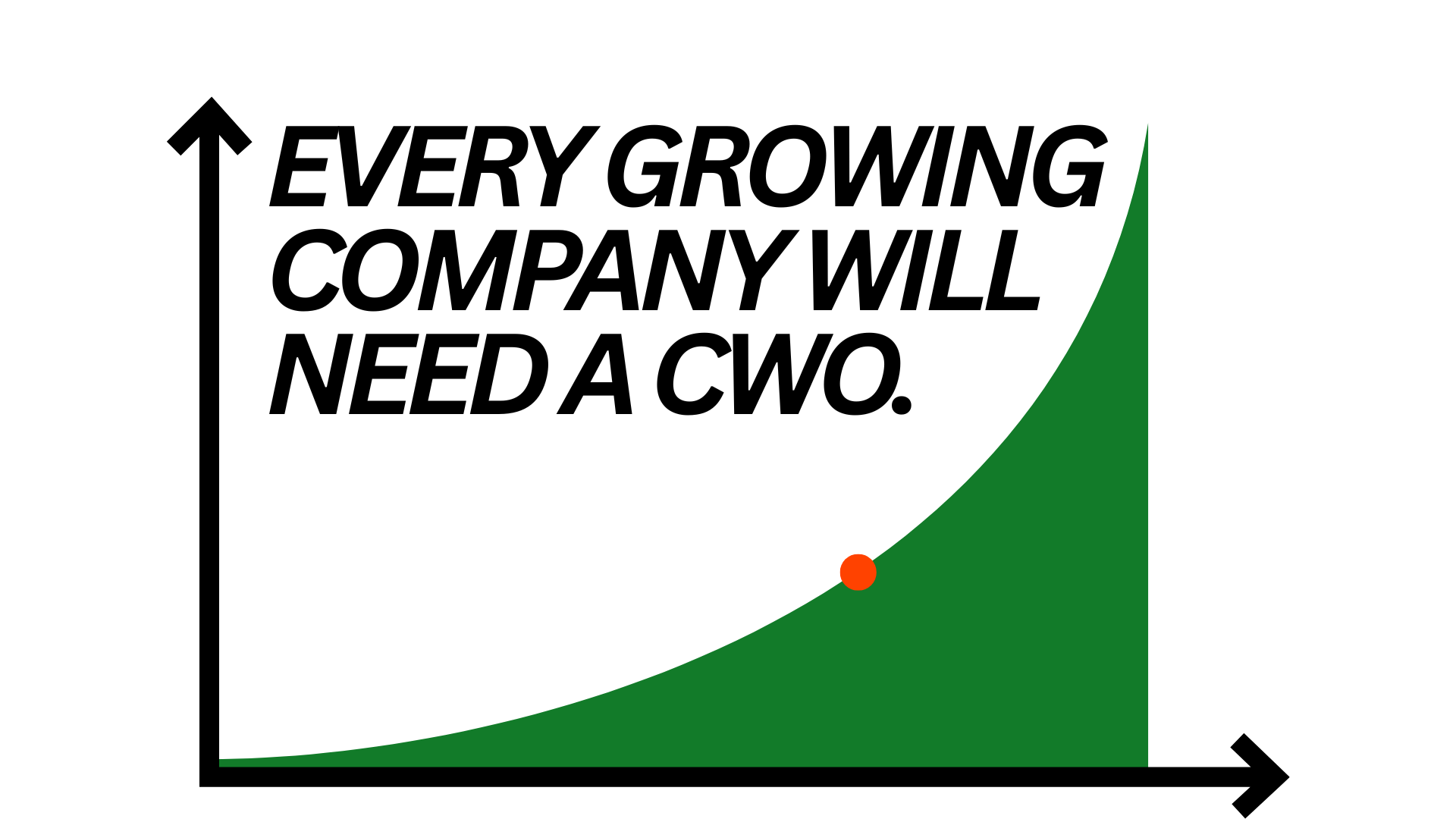
But growth changes businesses in ways that are often invisible.
The systems that worked with five employees begin breaking with twenty. The website that supported one service struggles to support ten. Marketing begins generating opportunities faster than the digital experience can convert them.
Complexity quietly replaces clarity.
The danger is that this transition doesn't happen overnight. It happens gradually. Which means many businesses don't realize they've crossed the line until they're already paying for it.
Over the years, I've noticed the same warning signs appearing again and again. Not in one industry. Across almost all of them.
Your Website Has Become Everyone's Responsibility
This is usually the first signal.
On paper, it looks collaborative. In reality, nobody owns the outcome.
The website becomes a shared responsibility instead of an owned asset. Whenever everyone can request changes but nobody is accountable for long-term performance, the website slowly becomes a reflection of internal politics rather than business strategy.
That's rarely intentional. It's simply what happens when ownership disappears.
You Keep Rebuilding Instead of Improving
Some businesses redesign their website every three or four years. Others seem to rebuild something every six months.
Every initiative promises to fix the previous one. Yet after enough time, you notice something interesting. You're solving different problems. But asking the same questions.
The business keeps investing in execution. Very little time is spent understanding why those execution problems continue appearing.
One of the biggest shifts we made at Selvinx was moving away from project thinking altogether. Projects end. Business assets evolve.
The goal isn't to keep rebuilding your website. The goal is to keep strengthening one of the most valuable assets your company already owns.
Digital Decisions Depend on Whoever Speaks Loudest
This one is harder to recognize because it often feels normal.
Each request makes sense independently. But who decides which one creates the greatest business impact?
If priorities constantly change depending on the latest meeting, the loudest department, or the newest trend, you're no longer managing strategy. You're reacting.
Growing businesses eventually outgrow reactive decision-making. They need someone whose responsibility isn't representing one department. It's representing the health of the entire digital ecosystem.
Your Business Depends on Digital... But Nobody Owns Digital
This is probably the simplest test I can offer. Ask yourself one question.
"If our digital presence became 20% stronger over the next twelve months, who would be responsible for making that happen?"
Now ask the opposite.
"If it became 20% worse, who would be accountable?"
If you struggle to answer either question clearly, you've already discovered the real issue. Not whether you need another agency. Not whether you need another redesign. Whether you have ownership.
Because accountability cannot be shared forever. Eventually, somebody has to own the whole picture.
And that's exactly where the conversation around the Chief Web Officer begins — not as another executive title to add for the sake of hierarchy, but as an answer to a business problem that becomes increasingly expensive to ignore as companies grow.
Every Improvement Creates Two New Problems
One of the strange things about growth is that success often creates complexity faster than failure.
A successful advertising campaign generates more leads. Now your website needs more landing pages. Those landing pages require better analytics. Analytics reveal weaknesses in your customer journey. Improving the customer journey means changing your CRM. Changing the CRM affects your forms. Forms affect automation. Automation affects follow-up emails.
The moment you solve one problem, two more appear.
I've watched founders become frustrated by this cycle, believing they're somehow making poor decisions. Most of the time, they aren't. They're simply experiencing what happens when a business grows.
Growth naturally increases complexity. The objective isn't to eliminate complexity. It's to make sure complexity stays organized instead of becoming chaos.
That requires someone continuously asking, "How do all these decisions fit together?"
Your Agencies Are Doing Good Work, But the Business Isn't Moving Fast Enough
This is one of the most misunderstood situations I encounter. Business owners often assume that if growth feels slow, someone must be underperforming.
Sometimes that's true. Often it isn't.
I've worked alongside agencies that produced excellent creative work. SEO teams that genuinely improved visibility. Developers who built reliable systems. Marketing consultants who understood acquisition exceptionally well.
Yet the business still struggled to gain momentum. Why?
Because nobody was coordinating the entire ecosystem.
Imagine an orchestra filled with world-class musicians. Each person knows their instrument perfectly. Without a conductor, however, brilliance becomes noise.
Digital businesses work the same way. Execution without orchestration eventually creates friction. The larger the business becomes, the more valuable coordination becomes.
Leadership Is Making Website Decisions Without Enough Context
Founders are forced to make hundreds of decisions every month.
The website often becomes just another item on an already impossible list. So decisions become reactive.
Someone recommends a redesign. Approved. Someone suggests new software. Approved. Someone says competitors are using AI chatbots. Approved.
Individually, none of these are necessarily poor decisions. The challenge is that they're rarely connected to a long-term strategy.
Leadership ends up managing digital assets the same way people manage email — responding to whatever appears next. That works for a while. Eventually it stops scaling.
Your Website Has Become Too Important to Ignore
This is usually the turning point. Not because the website suddenly changes. Because the business does.
At some point, the website quietly stops being a marketing asset. It becomes business infrastructure.
And business infrastructure deserves executive ownership.
So... Should You Hire a Chief Web Officer?
If you've read this far hoping I'd tell you that every company needs a Chief Web Officer, I'd actually disappoint you. I don't believe that.
Titles don't solve problems. Ownership does.
Some companies already have someone internally who naturally thinks this way. Maybe it's a founder. Maybe it's an operations leader. Maybe it's a head of digital who has gradually taken on broader responsibilities.
If that's true, you may already have the function without the title.
But if you've recognized several of the signs we've discussed, it's worth asking whether that ownership has become too large to remain informal.
That's where many businesses find themselves. They've outgrown project-based thinking. They've outgrown relying on agencies to make strategic decisions. They've outgrown hoping that different specialists will somehow coordinate themselves.
What they haven't yet outgrown is the assumption that another redesign or another marketing campaign will solve what is fundamentally an ownership problem.
It rarely does.
Why We Built Selvinx Around This Idea
When Ayan, Mohib, Kaif, and I founded Selvinx, our ambition wasn't to create another web company. There are already thousands of businesses that build websites. Thousands that offer SEO. Thousands that manage advertising.
We respected those disciplines because we came from many of them ourselves. But the longer we worked with growing businesses, the more convinced we became that the real opportunity wasn't another service.
It was ownership.
We didn't want clients hiring us because we were exceptional at WordPress. Or because we knew SEO. Or because we designed beautiful interfaces.
We wanted them to hire us because someone needed to wake up every morning thinking about the health of their digital presence as if it were their own business.
That's why we describe the Chief Web Officer as an operating model rather than simply a job title. Sometimes that role exists inside the company. Sometimes it's delivered fractionally. What matters isn't where the person sits.
What matters is that somebody owns the outcome.
A Different Way to Think About Your Next Hire
The next time your business begins discussing another redesign, another platform migration, another SEO agency, or another digital initiative, I want to leave you with one question.
Don't ask, "Who can build this?"
Ask:
"Who will own this after it's built?"
Because construction and ownership are two very different responsibilities. One creates assets. The other ensures those assets continue creating value.
I believe that's the conversation more businesses need to have. Not because every company should immediately hire a Chief Web Officer. But because every growing company eventually reaches the point where digital success depends less on creating new assets and more on taking responsibility for the ones they already have.
The businesses that recognize that shift early won't just have better websites. They'll have stronger systems, clearer priorities, healthier customer experiences, and a digital presence that compounds in value instead of quietly accumulating complexity.
That's ultimately what a Chief Web Officer is meant to protect.
Not the website.
The business behind it.