Your Business Doesn't Need Another Web Agency. It Needs Digital Leadership.
Execution has become abundant. Stewardship hasn't. Learn why growing businesses are quietly outgrowing the agency model — and what comes next.
I don't think the biggest mistake growing businesses make is hiring the wrong agency. I think it's expecting an agency to solve a leadership problem.
That sounds harsh. But hear me out.
Agencies are built to execute. Leadership is built to decide. Those are fundamentally different responsibilities.
Yet somewhere over the last twenty years, businesses quietly started expecting agencies to do both. Build the website. Tell us what to build. Manage the roadmap. Prioritize investments. Connect marketing with operations. Improve customer experience. Support sales. Increase enterprise value.
That's an impossible expectation. Not because agencies aren't capable. Because that's not what agencies were designed to do.
Every Business Eventually Reaches the Coordination Ceiling
Early-stage companies don't usually notice this problem. The founder makes every important decision. The agency executes. Everyone moves quickly.
As the company grows, that model begins to break.
Suddenly, digital work no longer revolves around one website. It revolves around an entire business ecosystem.
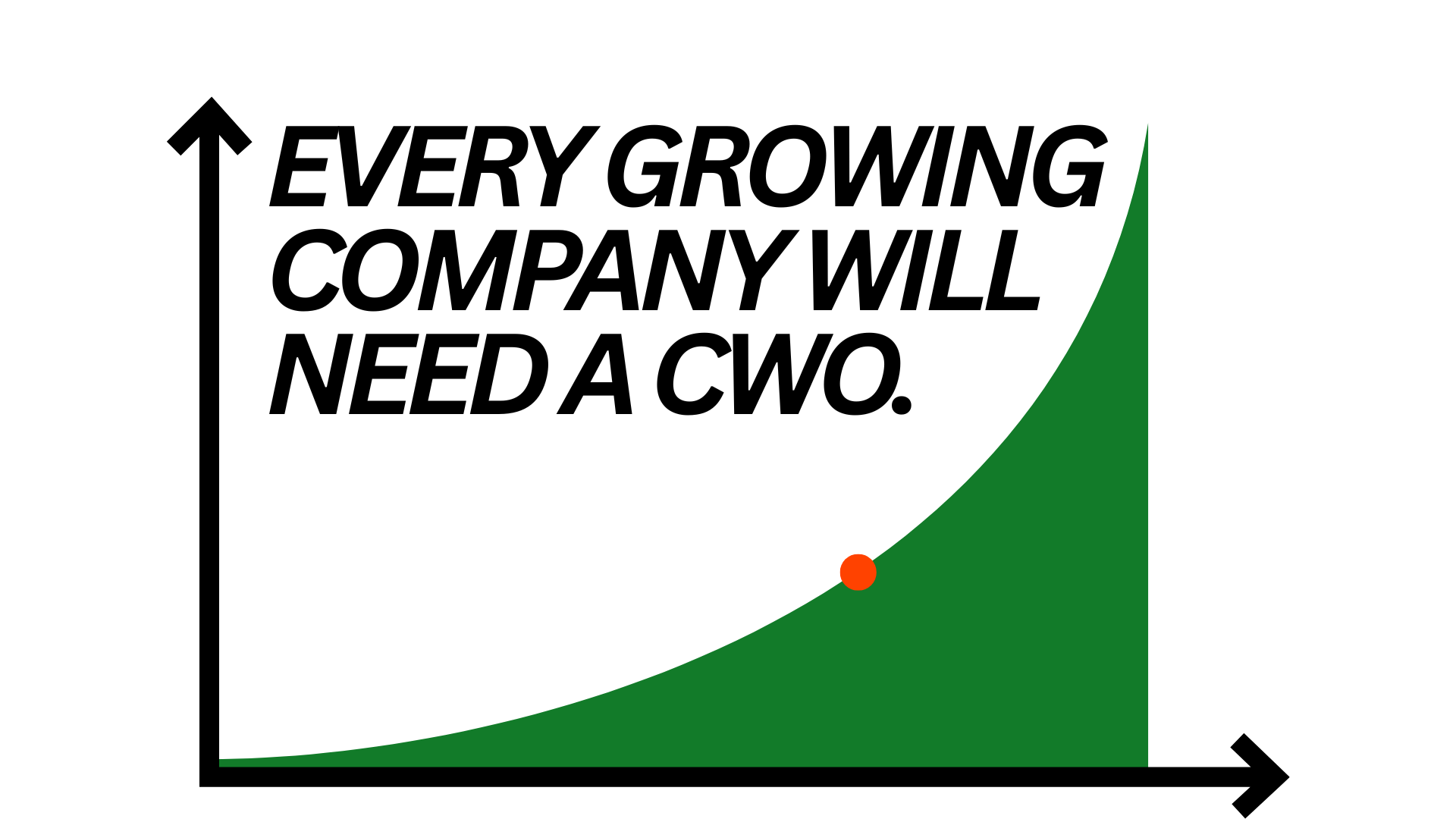
The agency hasn't changed. The business has. And the coordination required to keep everything aligned increases exponentially.
The Coordination Ceiling
This is what I call the coordination ceiling. The point where execution is no longer the constraint. Alignment is.
The Market Is Full of Execution. It's Short on Stewardship.
Take a step back and look at the digital industry today. There are thousands of agencies. Millions of freelancers. Countless AI tools.
Building digital assets has never been easier. Need a website? Hundreds of providers. Need SEO? Thousands. Need branding? Almost unlimited options.
Execution has become abundant. Stewardship hasn't.
Very few people wake up every morning asking, "How do we increase the long-term business value of this company's digital ecosystem?"
That's a completely different responsibility. One that's measured over years, not projects. One that's evaluated by business outcomes, not completed deliverables. And one that becomes increasingly valuable as businesses grow.
Why We Believe the Agency Model Is Reaching Its Natural Limit
Every professional service eventually evolves. Accountants became finance departments. IT support became technology leadership. Recruiters became talent acquisition functions.
As responsibilities became more strategic, leadership naturally emerged above execution.
How Professional Services Evolve Into Leadership
I believe web agencies are approaching that same evolution. Not because agencies are becoming obsolete. Because digital itself has become too important to remain a collection of isolated projects.
Websites influence revenue. Customer acquisition. Brand trust. Operational efficiency. Recruitment. Customer education. Partner confidence. Investor perception.
When one business asset touches that many parts of an organization, somebody has to think beyond the next project.
That's why we've become increasingly interested in the role of the Chief Web Officer (CWO). Not as another agency. Not as another vendor. But as a strategic leadership function focused on governing the company's digital assets the same way a CFO governs financial assets.
The Businesses That Scale Best Change Their Operating Model
One pattern stands out when studying companies that continue growing efficiently. They don't simply buy more services. They change how decisions are made.
Execution remains important. But execution becomes organized around ownership instead of requests.
From Buying Expertise to Building Capability
That single shift changes everything. Because once ownership becomes the organizing principle, projects stop competing with one another. They start reinforcing one another.
And that's where businesses stop managing digital work... and start building long-term digital advantage.
I've come to believe that's the transition many founders don't realize they're making. At first, you're buying expertise. Eventually, you're building capability. Those are not the same investment.
One helps you complete work. The other changes how the business operates.
That's why I don't think the future belongs to businesses with the most digital vendors. I think it belongs to businesses with the clearest digital governance.
Digital Leadership Creates Leverage. Agencies Create Execution.
One mental model has helped me separate these two ideas.
Imagine a construction company. Architects design. Engineers calculate. Contractors build. Electricians wire. Plumbers install. Every specialist contributes something valuable.
But none of them individually determines whether the completed building serves the owner's long-term vision. Someone has to coordinate the entire system.
The Construction Analogy
Business works exactly the same way. Agencies are exceptional at execution. Developers are exceptional at engineering. Designers are exceptional at experience. Marketers are exceptional at acquisition.
But execution alone doesn't answer questions like:
Those are governance questions. And governance always sits above execution.
Why the Chief Web Officer (CWO) Model Exists
This is precisely why we believe the Chief Web Officer (CWO) is becoming a necessary leadership role. Not because businesses suddenly need another executive title.
Because businesses already have the responsibility. They just haven't named it.
Someone is already making decisions that shape the future of the company's website. Its customer experience. Its digital infrastructure. Its online trust. Its conversion systems. Its knowledge assets. Its digital investments.
The question is whether those decisions are intentional... or simply happening as a byproduct of everyone else's priorities.
A Chief Web Officer (CWO) doesn't replace agencies. In fact, great CWOs make agencies more effective. Because every agency now works toward a shared strategic objective instead of interpreting business priorities independently.
That's the difference.
Why the Best Businesses Don't Outsource Thinking
One observation keeps reinforcing itself every year. The highest-performing businesses outsource execution. They rarely outsource judgment.
What the Best Businesses Outsource vs What They Own
- Accountants (execution)
- Lawyers (execution)
- Software engineers (execution)
- Marketing agencies (execution)
- Web developers (execution)
- Designers (execution)
- Financial strategy
- Business strategy
- Product direction
- Brand positioning
- Digital governance
- Enterprise value creation
They hire accountants. They still own financial strategy. They hire lawyers. They still own business strategy. They hire software engineers. They still own product direction.
Digital should be no different.
Execution can absolutely be external. Ownership shouldn't be.
Whether that ownership comes from an internal executive, a Fractional Chief Web Officer (CWO), or a strategic leadership partner is less important than one principle:
Someone must own the long-term business outcome — not just the work being completed.
Because without ownership, execution naturally becomes reactive. With ownership, execution becomes cumulative. Every project builds on the previous one. Every decision strengthens the next. Every investment creates more leverage than the last.
That's how businesses build competitive advantages that are difficult to replicate.
The Future of Digital Isn't More Agencies. It's Better Governance.
If I had to summarize where I believe this industry is heading, it would be this:
Building digital assets will continue becoming cheaper. Managing them will become more difficult. Artificial intelligence will reduce production costs. No-code tools will reduce technical barriers. Automation will remove repetitive work.
Execution will become increasingly abundant. What won't become abundant is strategic judgment.
Those responsibilities don't belong inside another project brief. They belong inside leadership.
That's why I don't think growing businesses eventually outgrow traditional web agencies because agencies stop delivering value. They outgrow them because their greatest challenge is no longer execution.
It's orchestration. It's governance. It's ownership. And those are fundamentally executive responsibilities.
That's the future we're building toward at Selvinx. Not another agency model. A leadership model where digital is managed with the same strategic discipline as finance, operations, and every other function that determines the long-term value of a business.
Because businesses don't create enduring advantages by completing more projects.
They create them by making sure every project contributes to the same destination.
Over time, that's what separates companies that stay busy...
From companies that keep becoming more valuable.

Ready to Move Beyond Execution?
Stop collecting vendors. Start building digital governance. Book a Website Performance Assessment.
Book Your Assessment →