The Ownership Gap Isn't a Website Problem. It's an Executive Problem.
Fragmented decision-making quietly erodes enterprise value. Learn why intentional ownership is the defining leadership challenge for businesses entering their next stage of growth.
Every business eventually encounters a limit. Not a market limit. Not a capital limit. A management limit.
It's the point where adding more effort stops producing proportional results. The team works harder. Marketing becomes more sophisticated. Technology improves. Processes become more detailed.
Yet growth starts feeling increasingly expensive.
Most companies respond by asking the wrong questions.
Those aren't bad questions. They're simply downstream questions.
I've become much more interested in the upstream one.
Who actually owns the outcome we're trying to improve?
Because if nobody owns the outcome, improving the tools rarely changes the trajectory.
Organizations Don't Scale Through Departments Alone
One mental model has shaped the way I think about businesses.
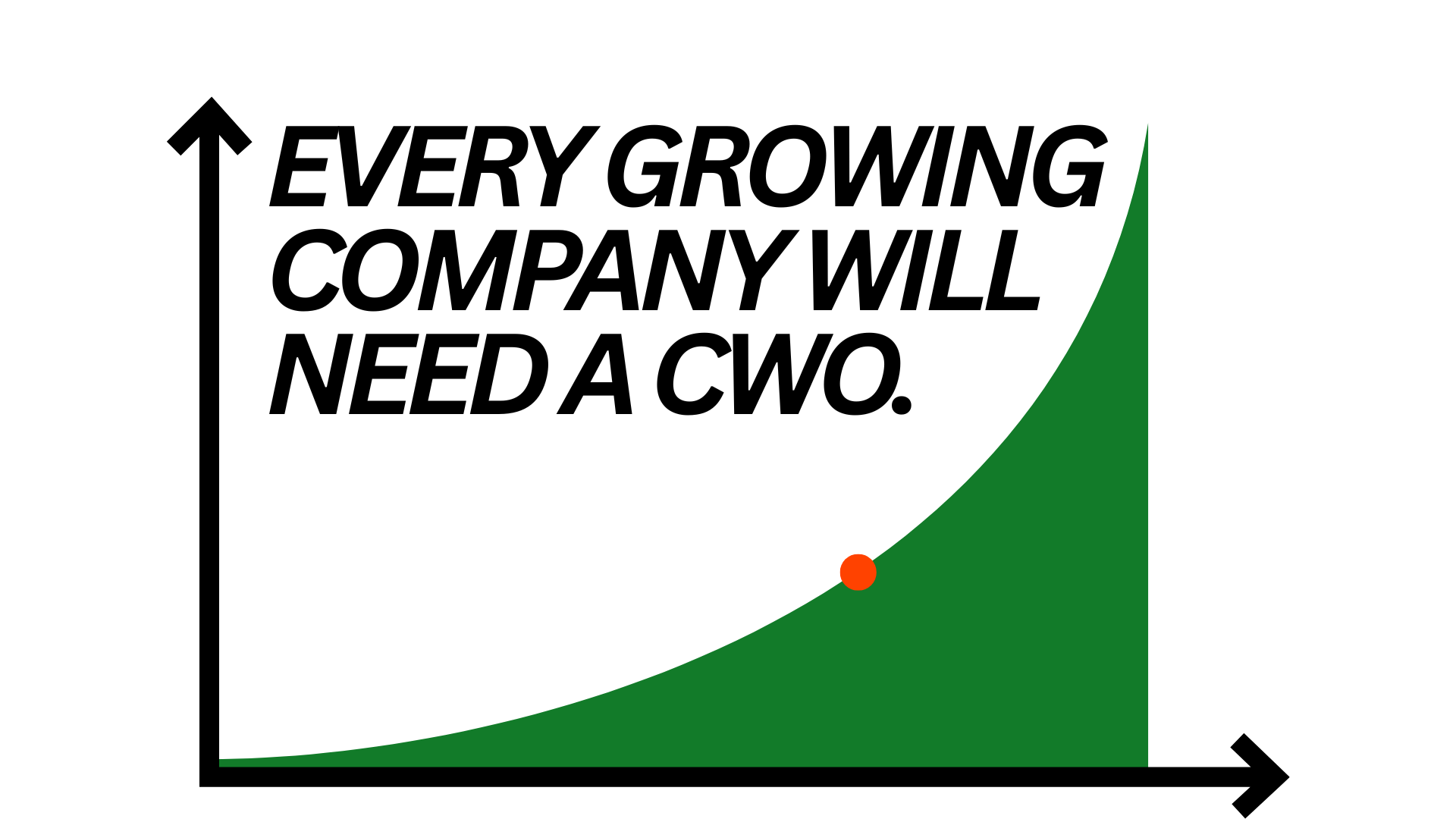
Companies don't scale because they add departments. They scale because they create clear ownership.
Think about finance. As a company grows, financial decisions become too important to remain everyone's responsibility. Ownership emerges.
The same happens with operations. Human resources. Legal. Technology.
Every important business function eventually reaches a point where someone becomes accountable for its long-term direction.
Not because they perform every task. Because someone has to connect thousands of individual decisions into one coherent strategy.
I've come to believe digital is reaching that exact stage.
The internet has become too important to remain everyone's secondary responsibility.
The Cost of Fragmented Decision-Making
One thing I've observed while studying growing companies is that most strategic mistakes don't happen because someone made a bad decision.
They happen because dozens of good decisions were made independently.
Every decision improves one area. Collectively, they sometimes reduce the effectiveness of the entire system.
Not intentionally. Simply because nobody evaluated how those decisions affected one another.
Fragmented Ownership vs Aligned Ownership
- Each department improves its own metrics
- Decisions made independently
- No evaluation of cross-department impact
- Business appears productive externally
- Internally, parts pull in different directions
- Subtle misalignment compounds over years
- Every decision evaluated against one objective
- Cross-functional impact considered first
- Continuity of decision-making preserved
- Local improvements strengthen the whole
- Direction stays coherent as business grows
- Good alignment compounds over years
That's what fragmented ownership looks like. From the outside, the business appears productive. Inside, leadership constantly feels like different parts of the company are pulling in slightly different directions.
It's subtle.
But over five or ten years, subtle misalignment compounds just as predictably as good alignment does.
The Businesses Creating Long-Term Enterprise Value Think Differently
One lesson I've borrowed from investing is that extraordinary returns usually come from protecting systems, not chasing events.
Markets fluctuate. Technologies evolve. Customer behavior changes.
Strong systems adapt. Weak systems react.
I think businesses operate the same way. Organizations that consistently create enterprise value aren't necessarily better at responding to every opportunity. They're better at making sure every opportunity strengthens the same long-term direction.
That's why ownership matters. It provides continuity. Not continuity of projects. Continuity of decision-making.
Every important choice is evaluated against the same strategic objective.
When nobody asks those questions consistently, the business doesn't immediately fail. It slowly becomes harder to steer.
Where We See the Ownership Gap Most Clearly
At Selvinx, we rarely begin by evaluating websites anymore. We begin by evaluating decisions.
The answers to those questions usually tell us far more than any analytics dashboard ever could.
Because dashboards measure outcomes. Ownership determines them.
That's why we don't think the ownership gap is another operational issue waiting to be solved. We believe it's becoming one of the defining leadership challenges for businesses entering their next stage of growth.
And once you begin looking at companies through that lens, it's remarkable how many problems stop looking isolated and start looking connected.
That realization completely changed how I think about scaling.
For a long time, I assumed scaling was primarily about increasing capacity. Hiring more people. Building better systems. Generating more demand. Expanding operations.
Those things certainly matter.
But capacity without alignment doesn't create leverage. It creates complexity.
And complexity, when left unmanaged, eventually begins managing the business instead.
Every Leadership Team Eventually Faces the Same Decision
At some point, every growing company has to answer a question it never needed to answer in its early years.
Who owns the spaces between our departments?
Not finance. Not marketing. Not technology. The spaces between them.
Because that's where modern businesses increasingly operate.
What Leadership Sees vs What Customers Experience
- Marketing owns traffic
- Sales owns CRM
- Customer Success owns onboarding
- IT owns infrastructure
- Operations owns systems
- Product owns features
- One company
- One journey
- One experience
- One reputation
- One decision
- One relationship
A customer doesn't experience your marketing department. They experience one company. They don't know where sales ends and customer success begins. They don't care which team owns the website, the CRM, the knowledge base, or the onboarding process.
They only experience whether everything feels connected. Or disconnected.
Internally, however, those experiences are created by dozens — sometimes hundreds — of independent decisions.
Without someone protecting the whole, every department naturally optimizes its own outcomes. The business becomes more efficient locally while becoming less effective globally.
That's one of the hidden consequences of the ownership gap.
Strategy Without Ownership Rarely Survives Execution
I've seen businesses spend months building impressive strategic plans. Clear goals. Defined initiatives. Excellent market research. Strong execution roadmaps.
Then six months later, very little resembles the original vision.
Not because the strategy was poor. Because ownership wasn't explicit.
How Strategy Drifts Without Ownership
One principle has become increasingly important to me:
Every strategy eventually becomes an ownership problem.
The quality of the strategy matters. The quality of execution matters. But the consistency of ownership often determines whether either survives long enough to produce meaningful results.
That's why we believe governance deserves far more attention than it currently receives.
Businesses don't lose direction in one dramatic moment. They lose it gradually, through thousands of decisions that no longer point toward the same destination.
Ownership Creates Organizational Compounding
There's a concept in investing that I think applies remarkably well to business.
Compounding doesn't happen because of one exceptional decision. It happens because good decisions continue reinforcing one another over long periods of time.
Ownership creates exactly that environment.
How Ownership Creates a Self-Reinforcing System
Customer insights improve products. Products improve customer experience. Customer experience strengthens reputation. Reputation lowers acquisition costs. Lower acquisition costs create healthier growth. Growth funds better systems. Better systems create better customer experiences.
The cycle reinforces itself.
Without ownership, those same functions often operate independently. The business still grows. But the advantages don't compound nearly as effectively.
One department solves today's problem. Another unknowingly recreates it six months later. Leadership spends time reconnecting work that should never have become disconnected in the first place.
That's not a people problem.
It's an ownership problem.
Why This Is the Future We're Building Toward
At Selvinx, we've gradually stopped defining success by deliverables. Deliverables have an end date. Ownership doesn't.
Today, we care much more about whether the businesses we work with become easier to lead twelve months from now than they are today.
Those questions matter because they influence enterprise value far beyond a single project. They determine whether a business continues compounding or slowly begins accumulating friction.
That's ultimately why we believe the ownership gap deserves executive attention.
Not because it's another operational issue. Because it quietly influences almost every operational issue.
Looking ahead, I don't think the businesses that outperform will simply be the ones with better technology, better marketing, or larger teams.
They'll be the ones that understand a principle many organizations still overlook.
Every important outcome deserves intentional ownership.
When ownership becomes clear, decisions become clearer. When decisions become clearer, execution becomes stronger. When execution becomes stronger, value compounds.
And over time, that's how exceptional businesses separate themselves from everyone else.
Not through one breakthrough initiative.
But through years of consistently owning what matters most.

Ready to Close the Ownership Gap?
Book a Website Performance Assessment. No pressure. No pitch. Just clarity on where your business is losing value.
Book Your Assessment →